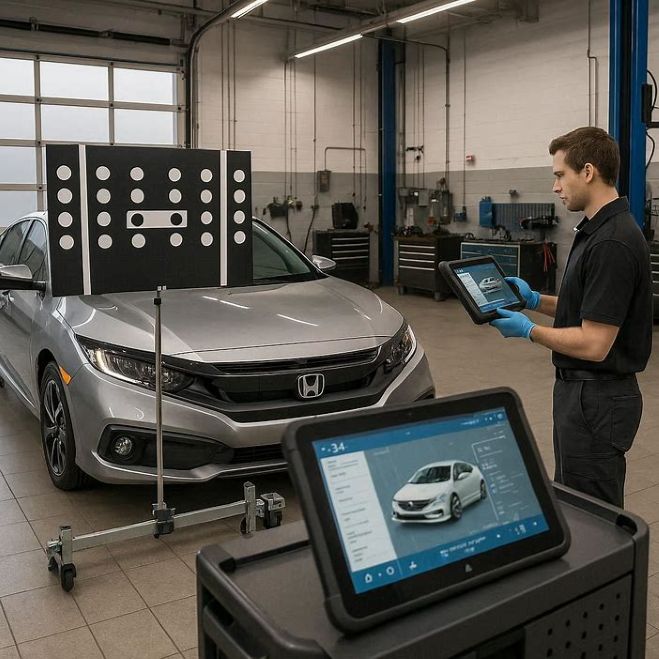
Research from AAA shows that average vehicle repair costs in the United States have increased steadily over the past decade, driven by more complex automotive technologies and higher parts prices. This trend is not isolated to one market; it reflects a global shift in how modern vehicles are designed, repaired, and maintained, with ripple effects on workers, commuters, and small business owners who depend on reliable transportation every day.
One of the clearest examples of this pressure can be seen in glass replacement systems, where even routine repairs have become significantly more expensive. For instance, services such as Honda Civic windshield replacement highlight how model-specific engineering and sensor-integrated glass increase both cost and complexity. The modern windshield is no longer a simple pane of glass; it now supports advanced driver-assistance systems, cameras, and calibration tools that raise the baseline cost of repair for everyday drivers.
Rising Costs of OEM Parts and Advanced Vehicle Systems
At the center of the issue is the growing reliance on Original Equipment Manufacturer (OEM) parts. While OEM components ensure compatibility and safety compliance, they also come with premium pricing that can strain household budgets. Data from the American Automobile Association (AAA) indicates that advanced driver assistance systems (ADAS), which often rely on windshield-mounted sensors, have contributed to a sharp increase in repair costs following even minor accidents.
This shift is especially evident in windshield-related repairs. What used to be a straightforward glass replacement has evolved into a multi-step process involving recalibration, diagnostic scanning, and model-specific installation procedures. Vehicles like the Honda Civic, widely used for commuting and ride-sharing, are particularly affected due to their integration of camera-based safety systems. As a result, drivers face higher bills even for relatively minor damage, and insurance premiums often reflect these growing risks.
Experts from McKinsey & Company have also noted that automotive complexity is outpacing traditional repair infrastructure, creating cost inefficiencies across the supply chain. These structural changes mean consumers are increasingly exposed to pricing volatility, especially when repairs involve OEM glass and embedded electronics.
Growth of Specialized Windshield Replacement Services
Despite these challenges, a new layer of specialized service providers has emerged to bridge the gap between affordability and technical precision. Independent auto glass companies have expanded their capabilities to include calibration tools, mobile repair units, and model-specific expertise. This is where services focused on Honda Civic windshield replacement and similar vehicle models play a significant role in stabilizing the market.
These providers offer a more accessible alternative to dealership-based repairs while still adhering to safety standards. By investing in training and diagnostic equipment, they are able to perform windshield installations that meet manufacturer specifications without the overhead costs associated with large dealership networks. Research shows that localized repair services can reduce turnaround times and, in some cases, lower costs by 20 to 40 percent depending on the vehicle model and region.
For working commuters, this shift is more than just convenient. It represents a practical adaptation to rising transportation costs. Mobile windshield repair services, in particular, allow vehicle owners to avoid downtime, which is increasingly important in economies where gig work and flexible employment depend on vehicle availability.
Pricing Transparency and Insurance Dependency
However, the expansion of specialized windshield services is not without criticism. One of the key concerns is pricing transparency. While independent providers often advertise lower costs, final pricing can vary widely depending on calibration requirements, vehicle make, and insurance arrangements. Without clear standards, consumers may struggle to compare services effectively.
Another issue is the growing dependency on insurance claims. As repair costs rise, many drivers rely on insurance coverage for even minor windshield damage. This trend shifts financial pressure from individuals to insurers, which can indirectly contribute to rising premiums across the board. Industry analysts from the Insurance Information Institute suggest that frequent small claims, especially for ADAS-equipped vehicles, are contributing to broader cost inflation in auto insurance markets.
These challenges raise important policy questions. Should there be standardized pricing frameworks for essential safety repairs? And how can regulators ensure that technological advancement does not unintentionally reduce consumer choice?
Toward Regulation, Fair Pricing, and Accessibility
The tension between rising repair costs and the need for accessible vehicle maintenance points to a broader structural issue in the automotive sector. On one hand, advanced safety systems have undeniably improved road safety outcomes. On the other, they have introduced layers of complexity that increase financial pressure on everyday drivers. These shifts also influence entrepreneurial decisions in the automotive space, particularly for those starting an independent used car dealership, where repair costs and vehicle condition directly impact pricing strategies and long-term viability.
A balanced approach may require coordinated action between manufacturers, regulators, and service providers. Standardizing calibration procedures, improving transparency in parts pricing, and supporting certified independent repair networks could help stabilize costs without compromising safety. Governments may also consider incentivizing training programs for technicians to ensure that expertise keeps pace with technological change.
In this evolving landscape, windshield repair services tied to popular models such as the Honda Civic serve as a microcosm of the broader issue. They demonstrate how innovation can both improve safety and increase economic burden if not carefully managed through policy and industry cooperation.
Building a Balanced Automotive Repair Ecosystem
The rising cost of vehicle repairs is no longer just a consumer issue; it is an economic and policy concern that affects labor mobility, household budgets, and insurance markets. As vehicles become more intelligent and interconnected, the cost of maintaining them will likely continue to rise unless structural adjustments are made.
A balanced automotive repair ecosystem should prioritize both innovation and accessibility. Independent windshield specialists, dealership networks, and manufacturers must operate within a framework that ensures fair pricing and technical reliability. When services related to vehicle glass replacement remain transparent and widely accessible, consumers benefit from both safety and financial predictability.
Ultimately, the challenge is not to resist automotive progress, but to ensure that its benefits are distributed equitably. By aligning regulation, industry standards, and consumer protection, the automotive sector can support a future where essential repairs remain within reach for the average driver, without compromising technological advancement or road safety.